










← Alex Hammond

Imagefactory.io · 2021–2025

Personalisation done really well

Create videos, gifs or images in bulk

What we do

We make really good personalised images and videos in bulk.

Once generated, these are securely stored online, each with a unique URL.

You can then use these personalised assets in your regular audience engagement channels.

How it works

  1. Have us make a bespoke template for you or pick a pre-designed one.
  2. Generate the images using either our API, CSV upload or mail-client integrations.
  3. Use the images and videos in your usual marketing channels.

Why?

Personalisation can be excellent for engaging your audience, improving click-throughs and enhancing general brand awareness, but we think you probably know this already.

01

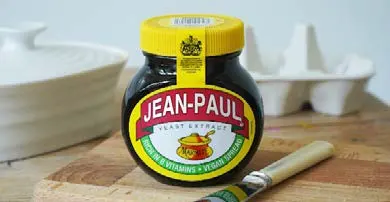
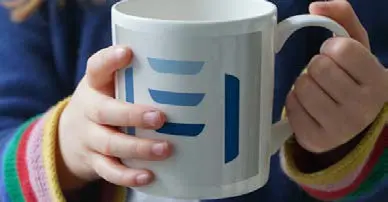
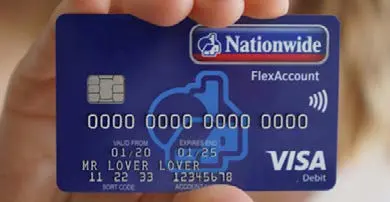
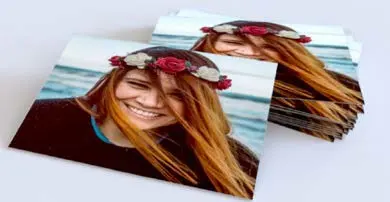
One template, every name

Same artwork — a new version for each person

Kate’s cuppa — Imagefactory personalised image
Tim’s cuppa — Imagefactory personalised image
Scrabble tiles — Mr Banks — Imagefactory personalised image
Scrabble tiles — Thanks Lou — Imagefactory personalised image
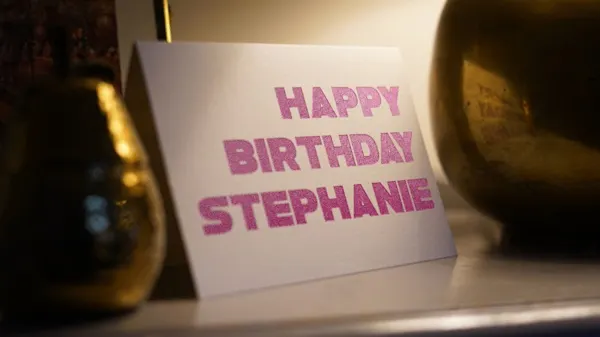
Birthday card — Stephanie — Imagefactory personalised image
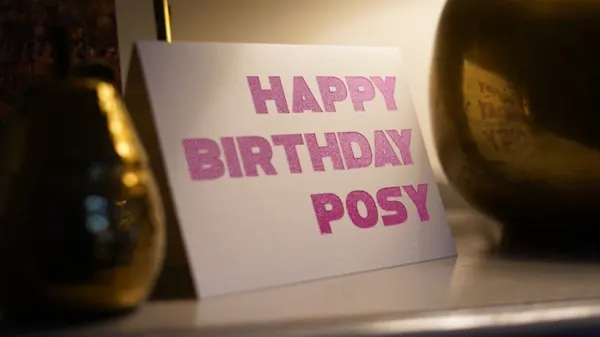
Birthday card — Posy — Imagefactory personalised image
02

I’ve seen this before

Our system uses a comprehensive 3D software environment to generate visuals. While some may consider this excessive, it provides us with greater creative control.

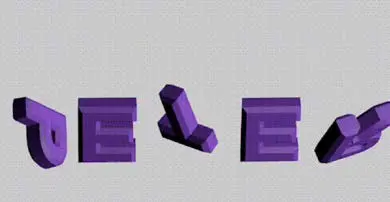
Unlike our competitors who simply overlay personalisation as flat graphics, our software allows us to incorporate personalised elements seamlessly into the image or video. This integration makes the personalised content more believable and enhances its ability to engage your audience.

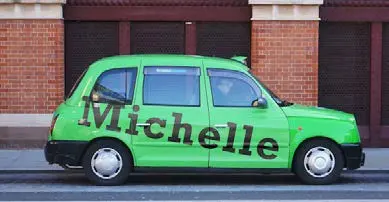
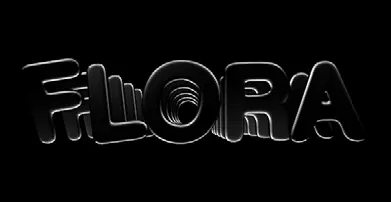
We can manipulate the text by wrapping, curling, or bending it, add effects like motion blur, dynamics, or depth-of-field. We can incorporate names into flags, write text on a bouncing football, or even make the text explode in a cloud of smoke.

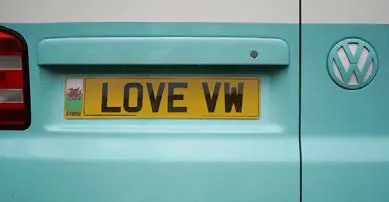
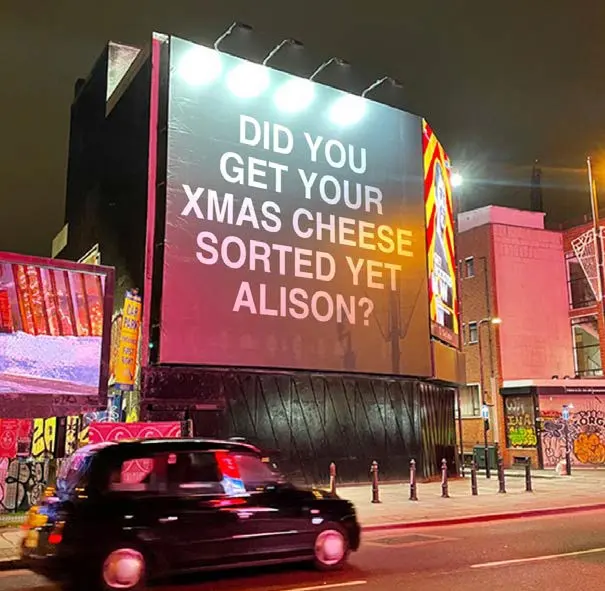
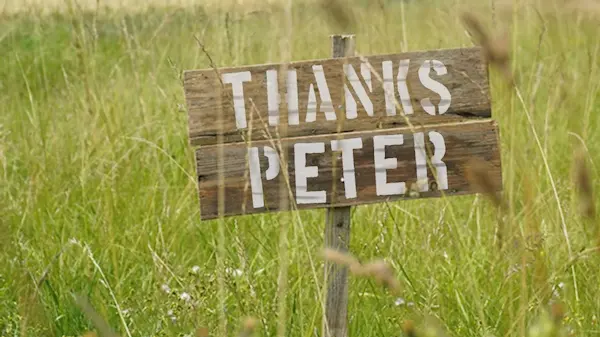
Alternatively, we can add text to a sign while ensuring the perspective, fonts, textures, and imperfections are precisely calibrated to create a realistic appearance.

03

Examples

18 templates, rendered in 3D

Video & animation

04

For email campaigns

  1. 1

    Create your theme

    Select one of our free templates, or create a bespoke one. A bespoke design can make sure the template is a pure reflection of your brand or marketing campaign. We create these with you, and will work, where appropriate, with your existing 2D/3D design team.

  2. 2

    Process your database into images

    Upload a .csv file containing the names of all your contacts. Select which template you’d like to use and click generate to make an image for every contact in your list.

  3. 3

    Merge and send

    Imagefactory.io creates a unique URL for each image and adds it as a new column in the original .csv file. Re-upload this to your email sending software and merge it into your campaign.

This is the cleverest email I have ever received.

05

Billboards

See your campaign as your audience would

06

How to use it

07

Bespoke templates

From £250

You might not want to use a stock template design for your brand. So let us create one for you.

Your image needs to speak for you. More importantly, it needs to speak to your customer. Get the balance right, and you will achieve customer engagement and sales. You may have an idea already but if not, don’t worry — our designers love to chat about ideas and will work out a plan with you.

Images
For any photographic-style templates, we’ll need some background photos. These can be stock images or images you use for other marketing needs.
Fonts
For any fixed or personalised text elements, we’ll need font choices. Our design team can suggest some ideas, or we can match them to your brand guidelines.
Personalisation
What aspects of your template would you like to personalise and which parts do you want to be fixed? You have control over all these decisions, including height, width, and character length restrictions.
Sizes & ratios
Our standard image ratio is 16:9 with a pixel width of 600px. For bespoke templates, we can change this to suit your needs.
08

Frequently asked questions

What is Imagefactory?

Imagefactory uses advanced 3D software to generate marketing images and videos tailored to your brand or campaign. We can personalise almost any visual content — with text, images, or video — and produce anything from a single asset to 100,000 unique versions.

How much does it cost to have a custom template created?

From as little as £250. Costs increase with the complexity of the template. We calculate animation costs based on complexity and duration, and we will work with your existing assets and 2D/3D team to make this as cost-effective as possible.

What limitations are there to a template design?

Very few! We can use full CGI or incorporate CGI elements into a photo or film footage.

What resolutions are available?

Standard resolution is 600 × 337px: small and lightweight for email and web images. Larger formats and different image ratios are available when ordering a custom template.

How long does one image take to create?

It all depends on the size and complexity of the image or animation. The quickest image takes about 0.2 seconds. Animations can be as quick as 1 second; the more complex the image or animation, the longer it can take.

Can you speed up processing times?

Yes. Cloud computing means we can scale up the infrastructure. More processing power does mean higher costs, however.

What do you do with the data you collect and use?

We automatically delete all generated images and raw files we process within 24 hours of creation. Stripe handles payment transactions and security.

What software do you use?

We create templates in Cinema 4D and render them with the built-in C4D renderers or Redshift.

Does Imagefactory work in all languages?

We can adapt themes to accommodate a variety of languages.

09

Why Imagefactory.io

Imagefactory.io was created by a team of experienced creatives who have spent decades producing marketing images and videos for various brands.

The idea of creating just one version of an asset may seem impractical.

Instead, we believe in crafting marketing assets with meticulous care and attention, and then effortlessly generating thousands of personalised duplicates. Each duplicate remains on-brand and on-message, tailored to the individual recipient.

Does it work?

Yes, but you are the best judge. You are still here, so something is working… If we managed to capture your attention and hold it for more than a few seconds, it is likely that your audience will behave in a similar manner.

10

Journal

8 posts by Alex Hammond, 2022

AI marketing and how to maximize its impact

Skynet, Arnie and his band of cybernetic assassins are trying to bring nuclear holocaust on our joyous spandex, neon and mulleted 1985 existence.

Read

If you subscribe to the same podcasts, newsletters and news feed I do, you'll be aware of the AI and machine learning world thundering forward at an incredible pace. If you are of a similar generation (somewhere in your 40s), you might have similar cultural reference points. Skynet, Arnie and his band of cybernetic assassins are trying to bring nuclear holocaust on our joyous spandex, neon and mulleted 1985 existence.

To move beyond James Cameron's version of the future, we should first look backwards. Let's rewind a little further to Alan Turing, who in 1950 released his paper - Computing Machinery and Intelligence - in a time when computers were only able to execute very simple commands, this paper highlights the genius of Mr Turing. From the late 50s onwards, computer speeds increased rapidly, broadly adhering to Moore's Law, and with that, machine learning and algorithms research became practical rather than just theoretical. Historically underfunded and side-lined, the science of AI was slow to evolve. Perhaps because of a hard-wired evolutionary human resistance to undermine our intellectual dominance or perhaps because for decades, the computing power required to develop artificial intelligence was factors of x100 insufficient.

Despite the uphill struggle in the 1980s, John Hopefield and David Rumelhart introduced "deep learning" techniques that allowed computers to learn through experience, and Edward Feigenbaum introduced "expert systems" that mimicked human decision-making. These were watershed moments, finally providing a platform to showcase the burgeoning power of artificial intelligence. In 1996 Gary Kasparov was defeated by IBM's Deep Blue, a chess-playing computer program. This is the moment the world sat up and took notice, as the heavily publicized series of events made headlines across the globe.

The race was on. In 2022, artificial intelligence is everywhere, although often as a silent back-room partner, but we are just at the beginning.

'Artificial Intelligence will eventually disrupt virtually every single industry.

Artificial intelligence in marketing leads us to personalization: marketing messages, behaviour, strategies and predictions. Crunch enough data, and every human's actions can be represented as a 'path of likelihood'. Your metrics, historical actions and an ocean of other influences demonstrate that we are creatures of habit, driven, not by free-thinking, but more often subconsciously based on who we are.

One of the challenges is how this 'intelligence' can be presented. Decades of research, billions of hours of computing, some of the most intelligent minds (human) on the planet and the final deliverable is a line of text that encourages me to buy a blue car, because they know I like the colour blue. Or an email trying to sell me some Converse Chuck Taylors because they know I did last summer.

We all understand this is the beginning of AI. But, right now, it feels disjointed. I think there is an opportunity to combine all this 'knowledge' to represent a message so on-point that a single notification can deliver arresting engagement in the blink of an eye.

Key objectives for an AI-driven personalized campaign.

Targetted message - Content-driven Channel specific - Delivered on a marketing channel appropriate to the user Timing specific - Delivered at an appropriate time Relevant imagery - Geographically, socially and environmentally specific Message presentation - The language, tone and length of the message. Appealing presentation - Fonts, colours, even text kerning! Animated or still image - Duration, image ratio or even gifs.

This list represents a vast amount of customers' preferences that might be in the hands of a marketing agency. The holy grail would be stitching this all together, delivering it in an integrated manner. Maximum effort will yield maximum results.

AI has and still does have an image problem. It is the way it's presented that need a rebrand.

Alex Hammond

Founder of imagefactory.io

A full, personalized marketing message in the blink of an eye

How to create personalized images for email marketing

Let's get the cliche out of the way right at the start. "An image paints a thousand words."

Read

Wiki describes the power of an image well….complex and sometimes multiple ideas can be conveyed by a single still image, which conveys its meaning or essence more effectively than a mere verbal description.

So why isn't everyone using personalized images in email campaigns? When attention spans are low, and the speed at which you can communicate your marketing message is paramount, you would think everyone would be using the power of images? Well, it isn't always straightforward, but read on, and we'll set out some options for you.

When using personalized images in an email campaign, what hurdles do you have to clear?

Creating the image Embedding the image into your campaign.


This blog focuses on the creation of the image itself. We'll cover the 'embedding images' part in a separate blog post. How the images are merged into your email campaign differs slightly depending on which ESP you use.

Canva Canva is brilliant. The people's Photoshop, as some call it. - ideal for creating marketing imagery, a DIY graphic design tool for business. Pick a background, add text, design as you see fit and export it as a jpeg (or similar), nice and straightforward. The problem being is that if you want to make it personalized, you'll need to book out some time. Each name in your database must be manually typed in, scaled appropriately, exported and dropped into the corresponding email. Hardly a reasonable way to progress if you have a mailing list more than 100 people long!

PRO - No coding required, maximum flexibility with design CON - A manual process

Nifty Images Nifty Images have a series of tools helping to create personalized email experiences. One of their products is a personalized image builder explicitly designed for email campaigns to deliver each recipient their unique image.

Chose your background image, fonts, colors and a personalized element to drop into the image based on the merge tags (Name, Email, Account, etc.) generated by your email client/ESP. Paste a code snippet into an HTML block in your email design and click send. Viola - personalized images to all your contact list.

PROs - Fast production, unlimited design possibilities. CON - Flat graphical personalization only.

Hyperise.com A broad portfolio of personalization tools, including the ability to superimpose images onto images and correctly map perspective (ish). Profile images, website screenshots, voice-overs and the familiar first name, last name and email are all elements that can be personalized with Hyperise.com.

They can provide personalization across multi-channel platforms meaning everything from the website, chatbot, text, images, and animations are all tailored to each customer.

PROs - A complete toolkit of personalization CONs - The personalization doesn't integrate with the context very well. It looks a bit 'stuck on.'

Picsnippets.com

Their front page states: Personalize the journey from opt-in to outcome Send personalized images to your customers and prospects to increase engagement and sales.

They have an excellent drag-and-drop editor to enable endless design possibilities and can incorporate multi-channel marketing and the usual suspects of CRM/ESP Mailchimp, Klaviyo Zoho etc. They have a 'No code. No problem' - the tagline is reassuring as it does, at least initially look like a puzzle.

PROs - They have an 'unlimited sends' - pricing option and a compelling all-round package CONs - Using user-generated background images might end up looking a little home-spun.

Imagefactory.io The new kid on the block of image personalization, Imagefactory's core software works differently from its competitors. It's USP being realism. The personalization is 'Photoshop' quality, delivering a… 'how did they do that moment.' Each personalization is baked within the image's pixels and generated in a 2D or 3D environment, giving unlimited scope for creative applications.

PRO - Stop-in-your-tracks image realism CONS - Not as fast or developed as the competition - but catching up fast…

Whichever platform you end up using, what is very clear is the speed at which this personalization industry is moving. Audiences are becoming increasingly bombarded with laser-focused marketing about us, our habits, tendencies and overall buying behaviour; brands must keep upping their game to get ahead of their competition.

Personalized images in email are not revolutionary, but the quality, realism and cost to implement this technology are all factors driving this industry forwards rapidly.

The top five marketing personalization strategies

Want to know the best way to use personalization in your next marketing campaign? Let’s take five examples of how businesses target customers to boost their marketing ROI.

Read
  1. The simplest form of personalization we see day-to-day is what is called {{ FNAME }} (https://customer.io/blog/behavioral-email-personalization/) – a bit of code that adds your name to an email subject line. It’s been around for ages and its efficiency is failing. Studies show that it can be effective, but you should see it as a basic practice these days.

    Tracking online behaviour and serving relevant advertising is another form of personalization. Unless you block cookies, they will monitor your journey around the web and trigger subsequent marketing messages that arrive either as an email sequence or a cross-channel nurturing campaign.

    Personalization based on user-provided data is like tracking but uses data you have actively provided. Various sources will collect your personal details, career information, and maybe even your hobbies and general interests, and then sell or share that data. If you are in the market for a 2-bed North London apartment, a business may use that information to tailor a marketing campaign towards you.

    Your reaction and response to previous personalized campaigns, and the resulting success or failure metrics, may inform a subsequent marketing strategy. If you replied to a WhatsApp marketing message but failed to open the same message on email, a business may measure those actions and use them to further fine-tune you as a customer.

    Personalization through images or video is sometimes used to present your data in a more engaging way. It may show you a product you have viewed online, or might represent data, such as the color of the car you purchased last year, in a customer retention campaign. The more relevant and astonishing the image, the better. [link to another blog]

    All this personalization is based on data: your data. Your web history, preferences, circumstances – and a whole lot more – are rows upon rows of words and numbers in spreadsheets floating around in the clouds. However valuable this data is, the real key is how a business uses it. Algorithms, machine learning and a world of seriously clever – if not, frightening – analysis can take your data to make assumptions and decisions that guide a marketing process.

    But, as privacy movements fight against big organizations harvesting data, survey results suggest that 57% of respondents are fine with providing personal information on a website so long as it benefits them, and business use it in responsible ways. https://www.marketingcharts.com/digital-35416

    There is a movement that returns to a marketing strategy of previous generations and shows signs of being a major driver in online commerce. Personalization is the start, but the real challenge is creating a brand that we want in our lives.

    Your local butcher on main street might know your name, your kids, what you like doing at the weekend and how often you entertain guests – and, therefore, what products you want to buy. It’s unlikely you’d seriously object to him knowing this ‘data’ about you, as there is likely to be a form of reciprocal knowledge, a mutual appreciation of the butcher’s ‘products’, and a broad ethos alignment.

    While we will never turn our backs on e-commerce, we will intensify our scrutiny of brands. We will demand to know more about brands as a business: their ideology, environmental impact, and who they are as people. If those brands or organizations align with us as segmented consumers, we will be happier to engage with them.

    This will be our way of choosing who gets our attention, who is permitted to know and use our data, and who, fundamentally, is worthy of our money.

    Alex Hammond Founder of imagefactory.io

    Personalized photos: the next level of marketing personalization.

User-generated content v curated campaigns for personalized email campaigns.

We'll compare the merits of 2 distinct methods for creating personalized marketing content

Read

Creating personalized images and videos for email campaigns is becoming a crowded marketing place. There are a handful of players who are tackling the opportunity in slightly different ways. The products are broadly similar, with some companies focusing more on realism and others on easy-of-use.

You won't need to spend much time on google to find a statistic about how much more effective video marketing is when compared to still images and that personalization marketing is going to be essential in the coming years. https://www.statista.com/statistics/1133006/new-b2b-marketing-tactics-channels-usage-plans/

Both 'personalization (41%)' and 'videos (39%)' rank #2 and #3 on the list of new marketing tactics to be employed in 2022.

Therefore combining both video and personalization as a marketing service would seem to be an obvious win-win. There are two main approaches to generating this content. Customer-lead generation or if the technology can be slipped into a standard creative process developing marketing campaigns.

Let's look at a couple examples and how they offer a personalized video marketing product.

Personalized videos - User-generated content

Moovly has created a lightweight desktop video editor within a browser window. Using an interface similar to the Adobe products, there is a timeline, access to libraries and various timing and visual effects to deliver vast numbers of creative parameters at your fingertips. There will be a limitation when compared to professional video creating and editing tools. Still, they are presuming that a core number of features will keep many of the DIYers happy.

The visual quality of the outputs depends on the creative 'skills' of the operators and the assets that they are using in the video. It'll come as no surprise that professional video editors and producers are better than your average DIYer at making videos. It is for this reason that Moovly is a tool that is unlikely to be used for large brands, more suited to smaller companies where a DIY mentality is part of everyday work life. The other point of difference is the level of integration of personalization. These videos are, of course, personalized, but in a reasonably rudimentary text overlay sort of way. https://www.vyond.com/, https://biteable.com/ and https://simplified.com/ play in the same area, targeting the same customers.

Personalized videos - Curated + visually integrated

Get over the uncertainty of how to pronounce Idomoo and look deeper into the software. You'll see they are making a compelling product which can pull in various streams of personalized data and present it in a slick marketing video.

These videos are not created from within a DIY browser window. They are typically made using the normal channels of professional video creation in-house or supported by an external agency. The clever tech behind Idomoo will then personalized a few critical parts of the video and fully integrate these parts back into the professionally shot and edited video The last step is to bulk process these videos, one for every intended audience member, before being sent off to their intended recipient.

This creative process must be aligned with any large brand's creative department, marketing team and brand guidelines. Whilst being a more involved process, the end results will be more professional and the personalized element more seamlessly integrated into the video - creating a superior campaign.

But, let's stop for a moment.

Videos are excellent and engaging but can be fairly time-consuming to create, whether via the user-generated or curated campaign approach. Still images have a raft of benefits that perhaps shouldn't be forgotten.

  • Blink of an eye communication.
  • Lightweight and load straight into email.
  • No storyboard or voice-over to create.
  • Personalization of still images is easier than video.
  • Cheaper to produce an image compared to a video.

If a personalized image is well designed, curated and visually integrated into a comprehensive advertising campaign, it can be more efficient at delivering a marketing message than even a video.

We are not talking about a stock library background image with floating text here, but a single image which summarizes a brand and integrates a personalized message, with an explicit call-out and story-starting engagement. A fully curated and personalized marketing image.

Maybe not everything should be a video just yet.

Alex Hammond

Founder of imagefactory.io

Currated and crafted photo-real personalized marketing images

How to make people stop and look?

Five key elements that make personalized images believable

Read

Plenty of marketing tools make people stop and look. Some are designed only to do that – most people have fallen for click-bait at some point – while others are the start of a story that genuinely integrates into a brand or marketing message. When combined with other people-based marketing strategies and a personalized email campaign, an image can be a focal-point that summarizes lines of text into a single glanceable image.

A well-crafted personalized image holds a powerhouse of potential, but, at its core, it is simply a background image with a superimposed personalized element.

The creative skill in making those kinds of templates is what makes something believable. A genuinely realistic personalized image is the only way to really engage with an audience and immerse them into your brand’s world.

There are five components that make superimposed images believable.

1. Placement

Most photos, taken using consumer cameras and phones, illustrate perspective. The converging lines of a building, or elliptical circles, are easy to spot, but, as the human eye sees perspective too, we are accustomed to it. When it comes to incorporating another element into a photo, the two perspectives need to match for it to look realistic.

2. Light and Dark

Natural or electric light illuminates every photo in some way. In the real world, light is direct, bounced, reflected, and refracted; it can be warm or cold, and diffused or focused. All these elements, and much more, go together to build the illumination of an image that a camera lens captures. If we are trying to incorporate a new personalized element into a photo, we need to be able to recreate this lit environment.

3. Depth of field

Another key element in ‘believability’ is depth-of-field. If a photo has a focal point drop-off, any placed element incorporated into that photo needs to have the same focal drop-off for it to look realistic. You can glean some data and guidance on how to replicate depth-of-field from the metadata of the original photo, but you can use a by-eye approach if that isn’t available.

4. Obscurity In our busy world, we see very few things without some distraction obscuring the view. Instead of fighting this, we can use it to enhance the realism of superimposed text on an image background.

If an element from the background image appears in front of the superimposed element, the human brain will presume all elements of the image are correctly placed in the 3D space the photo represents. All elements of the image will be integrated, creating a more believable personalized image.

5. Imperfections

Nothing in our world is perfect. When working in the world of computer graphics, we add imperfections to increase the sense of realism. Perfectly smooth surfaces and reflections, precise repetitive patterns and excessive alignment all feel unnatural, and our brains tell us this is abnormal and, therefore, fake. The introduction of imperfections tallies more with the real world and creates something more believable.

We can apply these five components to almost any image creation process where we superimpose one element onto another. Whatever the message being superimposed, it will have greater impact, greater levels of believability and therefore, as a marketing tool, have far more impact.

Alex

Founder at imagefactory.io

imagefactory.io - Photoreal marketing images in bulk

How to give personalized marketing more impact

In the marketing world, attention is a valuable commodity. If you could somehow ‘buy’ it, the rest of the process would follow with some degree of predictability.

Read

These days, however, measures that once worked to get people to notice your business are on the wane, while the demand for their attention is ever increasing. Statistics currently suggest that 10,000 marketing messages bombard your customers every day: Link Their reaction, for the most part, is to block out those messages and protect themselves from the ‘attack’, making your marketing job more difficult.

So you need to get smarter.

This is where personalized marketing steps in: a fast-growing sector that harnesses the data people have given willingly.

If you use this data about your target customer – everything from where they work to what they like to do at weekends – you can tailor specific marketing messages in content, delivery, and frequency: fine-tuning everything to catch their attention and keep it.

But how do you present it?

Relevant messaging, optimized campaigns, a cross-channel approach … these are all very effective tactics, but the look and feel of what your customer ultimately sees hasn’t changed in decades. They still get flat text, overlaid onto stock imagery or video, dropped into their inbox. Or they see pop-up messages from bots pretending to be people, or email automations that don't fool anyone.

The tech behind segmenting customers is clever, but the end presentation is often, well, dull. Weirdly, personalized marketing is sometimes a little impersonal. Herein lies an opportunity. Personalized marketing needs to start a story with your customer at the center. You need to put them in the picture – literally.

Personalized marketing needs to be visually arresting. You must stop your customer in their tracks and wrap the core brand message around who they are.

  • If there was a billboard with your name on it, would you stop and look?
  • If there was a road sign that told you by name which way Paris was, would you double-take?
  • If an email arrived with an image of your name on a greetings card, would you think it was coincidence?

What you need is visually personalized media, using personalized data, done so well that the viewer stops for a second and thinks: “How did they do that?” If you want to see this in action, just take a look.

Alex Hammond

Founder of imagefactory.io

Personalized photos: the next level of marketing personalization.

Why we think personalisation can be better…

We at Imagefactory.io think personalisation can be better.

Read

A flat graphic of your name overlaid onto a stock image or video sequence is not going to engage the audience for long. Yes the video might be culturally or geographically relevant and your personal data might be shown too, but we think the connection can be deeper.

We want to start a story with your audience at the center, embed them into your brand or appeal to them on a 1:1 basis and we do that by creating personalised images that just look like photos.

If the audience, even for 1 second thinks that the image they are looking at is a photo (with their name on it) - There will be giant leaps in engagement, CTR and brand awareness. Isn’t that just photoshopped?

Well, yes and no.

We don’t use photoshop but the effects can be similar. However our software can generate 1000’s of photoshop quality personalised images in seconds - without anyone having to copy/paste a 1000+ times.

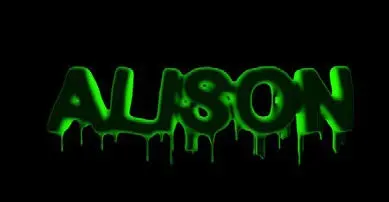
But Photoshop is fundamentally a 2D photo editing tool, extremely powerful for novice and professional alike. We work in the 3rd Dimension. Depth-of-Field, 3D light-effects, perspective and lens distortion are all baked into the process. Displacement, bump maps, reflection and refraction might not be everyday terms to everyone, but these can all play a role in making an image look and feel real - and that is our goal. The 3D software environment gives access to an almost unlimited toolkit to create real looking or surreal images. We can put your name on a billboard, but also create your name in dripping slime letters if you want that too!

Whatever the end goal a single Imagefactory template can use any number of tricks to make a really real compelling personalised visual that.

People-Based Marketing - a friendlier approach to personalized marketing

Privacy laws are finally catching up with the wild west of personal data collection and third-party cookies: that old world is coming to an end. Simultaneously, consumers are demanding more.

Read

These days, broad-brush approaches to marketing are considered lazy. Consumers expect a curated experience, and a personal two-way conversation is like a period of courting, prior to a relationship developing further.

Welcome to the new era of People-Based Marketing, and it is here to stay.

“91% of consumers are more likely to shop with brands who recognise, remember, and provide relevant offers and recommendations.” Credit - https://www.accenture.com/_acnmedia/PDF-77/Accenture-Pulse-Survey.pdf

People are willing to give away their data if they feel a business has earned it. To start that relationship, it might be prudent to start with one piece of data that is considered in the public domain: your first name.

We are talking about the difference between someone calling out “Hey, you!”, compared to “Hey, Daniel!” – providing your name is, of course, Daniel.

It is the simplest way to engage with someone in the real and marketing worlds.

But this isn’t just [[FNAME]] – the way to personalize the subject line of an email – first seen circa 2000.

Not at all.

Using someone’s name is a start, but an effective marketing message needs to create a connection and then contextualize it. It needs to demonstrate to your audience that you are using their data for their benefit, delivering a message of relevance, while, of course, giving the brand an opportunity to build loyalty and trust.

You may appreciate someone remembering your name at a dinner party, but if that person not only remembers your name, but recalls you are a vegan and suggests you try the Quorn sausage roll with your non-alcoholic beer because you gave up drinking two years ago … well, that is going to stick.

Immediately telling someone all the data you know about them can be creepy. Using the simplest form of personalization – a first name – in an impactful and contextual way might just be the beginning of a beautiful relationship.

Alex

Founder of imagefactory.io

Using the power of images to start a conversation